This free script provided by
JavaScript Kit
Lynx for pHantaBlog RSS: http://phantacea.com/blog/?feed=rss2
Welcome to the
|
Top of Page - Page Highlights - Upwards - Downwards - Bottom of Page Lynx
Phantacea Publications in Print- 'Phantacea Phase Two' 2016-2018 - The 'Launch 1980' story cycle - 'The Thrice-Cursed Godly Glories' Fantasy Trilogy - The '1000 Days' Mini-Novels - The phantacea Graphic Novels - |
||
Phantacea Phase Two 2016-2018 |
||
Decimation Damnation
Published in 2016; main webpage is here; ordering lynx are here; |
Hidden Headgames
Published in 2017; main webpage is here; ordering lynx are here; |
Daemonic Desperation
Tentative cover for Dem-Des; will probably be changed before it's published; scheduled to be released in 2018; |
| Phantacea Phase Two physically began with 2016's "Decimation Damnation", the first mini-novel extracted from the as yet open-ended saga of 'Wilderwitch's Babies'. It was set between the 9th of Tantalar and the 1st of Yamana, 5980 Year of the Dome. However, its follow-up, "Hidden Headgames" was set between the 30th of Maruta and the 14th of Tantalar in that same year. "Daemonic Desperation" picks up Babes near the end of the second week of Yamana and continues through the Summer Solstice of 5981. As the last known member of the Damnation Brigade, if the Witch was fortunate to survive Dec-Dam, alive and pregnant, she may not be so lucky come the end of Dem-Des. Oddly enough, her unborn babies may yet still be both viable and unborn by then. | ||
Top of Page Search Engine - pHantaPubs in Print - Page Highlights - Upwards - Downwards - Graphics - Bottom of Page Ordering Lynx |
||
The 'Launch 1980' Story Cycle |
||
The War of the Apocalyptics
Published in 2009; main webpage is here; ordering lynx are here; |
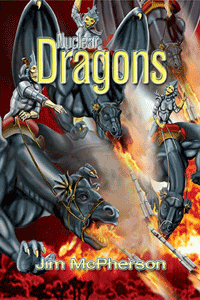
Nuclear Dragons
Published in 2013; main webpage is here; ordering lynx are here; |
Helios on the Moon
Published in 2014; main webpage is here; ordering lynx are here; |
The 'Launch 1980' story cycle comprises three complete, multi-character mosaic novels, |
||
Top of Page Search Engine - pHantaPubs in Print - Page Highlights - Upwards - Downwards - Graphics - Bottom of Page Ordering Lynx |
||
'The Thrice-Cursed Godly Glories' Epic Fantasy |
||
Feeling Theocidal
Published in 2008; main webpage is here; ordering lynx are here |
The 1000 Days of Disbelief
Published as three mini-novels, 2010/11; main webpage is here |
Goddess Gambit
Published in 2012; main webpage is here; ordering lynx are here |
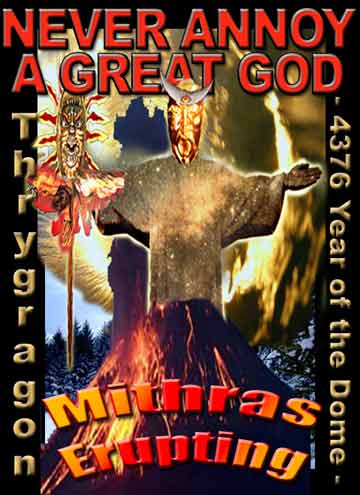
Circa the Year of Dome 2000, Anvil the Artificer, a then otherwise unnamed, highborn Lazaremist later called Tvasitar Smithmonger, dedicated the first three devic talismans, or power foci, that he forged out of molten Brainrock to the Trigregos Sisters. The long lost, possibly even dead, simultaneous mothers of devakind hated their offspring for abandoning them on the far-off planetary Utopia of New Weir. Not surprisingly, their fearsome talismans could be used to kill Master Devas (devils). For most of twenty-five hundred years, they belonged to the recurring deviant, Chrysaor Attis, time after time proven a devaslayer. On Thrygragon, Mithramas Day 4376 YD, he turned them over to his Great God of a half-father, Thrygragos Varuna Mithras, to use against his two brothers, Unmoving Byron and Little Star Lazareme, in hopes of usurping their adherents and claiming them as his own. Hundreds of years later, these selfsame thrice-cursed Godly Glories helped turn the devil-worshippers of Sedon's Head against their seemingly immortal, if not necessarily undying gods. Now, five hundred years after the 1000 Days of Disbelief, they've been relocated. The highest born, surviving devic goddesses want them for themselves; want to thereby become incarnations of the Trigregos Sisters on the Hidden Continent. An Outer Earthling, one who has literally fallen out of the sky after the launching of the Cosmic Express, gets to them first ... |
||
Top of Page Search Engine - pHantaPubs in Print - Page Highlights - Upwards - Downwards - Graphics - Bottom of Page Ordering Lynx |
||
The '1000 Days' Mini-Novels |
||
The Death's Head Hellion- Sedonplay -
Published in 2010; main web presence is here; Character Companion starts here; ordering lynx are here; |
Contagion Collectors- Sedon Plague -
Published in 2010; main web presence is here; Character Companion starts here; ordering lynx are here; |
Janna Fangfingers- Sedon Purge -
Published in 2011; two storylines recounted side-by-side, the titular one narrated by the Legendarian in 5980, the other indirectly leading into the 'Launch 1980' story cycle; main web presence is here; Character Companion starts here; ordering lynx are here; |
In the Year of the Dome 4825, Morgan Abyss, the Melusine Master of the Utopian Weirdom of Cabalarkon, seizes control of Primeval Lilith, the ageless, seemingly unkillable Demon Queen of the Night. The eldritch earthborn is the real half-mother of the invariably mortal Sed-sons but, once she has hold of her, aka Lethal Lily, Master Morgan proceeds to trap the Moloch Sedon Himself. In the midst of the bitter, century-long expansion of the Lathakran Empire, the Hidden Headworld's three tribes of devil-gods are forced to unite in an effort to release their All-Father. Unfortunately for them, they're initially unaware Master Morg, the Death's Head Hellion herself, has also got hold of the Trigregos Talismans, devic power foci that can actually kill devils, and Sedon's thought-father Cabalarkon, the Undying Utopian she'll happily slay if they dare attack her Weirdom. Utopians from Weir have never given up seeking to wipe devils off not just the face of the Inner Earth, but off the planet itself. Their techno and biomages, under the direction of the Weirdom of Cabalarkon's extremely long-lived High Illuminary, Quoits Tethys, have determined there is only one sure way to do that -- namely, to infect the devils' Inner Earth worshippers with fatal plagues brought in from the Outer Earth. Come All-Death Day there are more Dead Things Walking than Living Beings Talking. Believe it or not, that's the good news. |
||
Top of Page Search Engine - pHantaPubs in Print - Page Highlights - Upwards - Downwards - Graphics - Bottom of Page Ordering Lynx |
||
phantacea Graphic Novels |
||
Forever and Forty Days- The Genesis of Phantacea -
Published in 1990; main webpage is here; ordering lynx are here
|
The Damnation Brigade- Phantacea Revisited 1 -
Published in 2013; main webpage is here; ordering lynx are here |
Cataclysm Catalyst- Phantacea Revisited 2 -
Published in 2014, main webpage is here; ordering lynx are here |
Kadmon Heliopolis had one life. It ended in October 1968. The Male Entity has had many lives. In his fifth, he and his female counterpart, often known as Miracle Memory, engendered more so than created the Moloch Sedon. They believe him to be the Devil Incarnate. They've been attempting to kill him ever since. Too bad it's invariably he, Heliosophos (Helios called Sophos the Wise), who gets killed instead. On the then still Whole Earth circa the Year 4000 BCE, one of their descendants, Xuthros Hor, the tenth patriarch of Golden Age Humanity, puts into action a thought-foolproof, albeit mass murderous, plan to succeed where the Dual Entities have always failed. He unleashes the Genesea. The Devil takes a bath. Fifty-nine hundred and eighty years later, New Century Enterprises launches the Cosmic Express from Centauri Island. It never reaches Outer Space; not all of it anyhow. As a stunning consequence of its apparent destruction, ten extraordinary supranormals are reunited, bodies, souls and minds, after a quarter century in what they've come to consider Limbo. They name themselves the Damnation Brigade. And so it appears they are -- if perhaps not so much damned as doomed. At least one person survives the launching of the Cosmic Express. He literally falls out of the sky -- on the Hidden Continent of Sedon's Head. An old lady saves him. Except this old lady lives in a golden pagoda, rides vultures and has a third eye. She also doesn't stay old long. He becomes her willing soldier, acquires the three Sacred Objects and goes on a rampage, against his own people, those that live. Meanwhile, Centauri Island, the launch site of the Cosmic Express, comes under attack from Hell's Horsemen. Only it's not horses they ride. It's Atomic Firedrakes! |
||




Top of Page - Page Highlights - Upwards - Downwards - Bottom of Page Lynx
Jim McPherson's PHANTACEA Mythos |
| | Phantacea Publications Welcoming Page | Internal Search Engine | Main Menu | Lynx to additional PHANTACEA Websites | Online phantacea.com Primer | Ordering Information for PHANTACEA Mythos novels | Ordering Information for Additional PHANTACEA Mythos Print Publications | Contact | Web Publisher's Commentary | pHantaBlog | |
Feeling Theocidal |
|
©Jim McPherson, 2009 |



Top of Page - Page Contents - Bottom of Page Lynx
Lynx leading to a partial list of excerpts from the novel can be found here. Back cover text can be found here. List price is $24.00 in Canada and $23.00 in the USA. Individual copies of Since Lightning Source Inc (LSI) has exclusive rights to distribute the novel, a list of LSI's distribution partners, including a number outside of Canada or the USA, is here. Or you can email your order(s) directly to me today and I'll either arrange to fill them myself or send you details as to how you can order copies of the novel wherever you live.
|
|
PHANTACEA: Anheroic Fantasy since 1977
Cover Artwork by Verne Andru, 2008 |
Back Cover Blurb
©copyright Jim McPherson |


Top of Page - Page Contents - Bottom of Page Lynx
|

 Note on Page Background Images
... Recommence ... Top of Page ... Top of Section ... Bottom of Page Lynx ...
Webpage last updated: Spring 2014There may be no cure for aphantasia (defined as 'having a blind or absent mind's eye') but there certainly is for aphantacea ('a'='without', like the 'an' in 'anheroic')
|


